We work with a particular response, and the person feels better.
Good.
They have a calm week.
Also good.
But I do not call the work complete merely because the person is in a good mood and says, “I think it has gone.” The word *think* is exactly what needs testing.
Calming a response and changing it are not the same
During stabilization, a person learns to interrupt a response after it begins.
Perhaps panic while driving used to last fifteen minutes. Later, they can stop it in five, then two. Eventually, they notice the first signs and interrupt the reaction before it develops fully.
That is meaningful progress. The person is no longer helpless.
But the response still arrives and still has to be stopped.
Completed work looks different: the person drives out of town again and the old panic response does not start.
Regulation means I can stop it. Completion means there is nothing to stop in that situation.
Begin with one specific response
“All my anxiety” cannot be measured with one number as though the entire question has now become pleasantly mathematical.
I choose one memory or one situation. The person imagines it and rates the negative emotional response from zero to five.
Zero means no response. Five means the strongest response.
Suppose it begins at four. After the work, the person imagines the same scene again and checks what happens now—not what number would be encouraging, but what is actually present.
The first task is to understand what zero feels like for this specific target.
Try deliberately to bring the old response back
One specific response is tested—not the entire anxiety pattern at once.
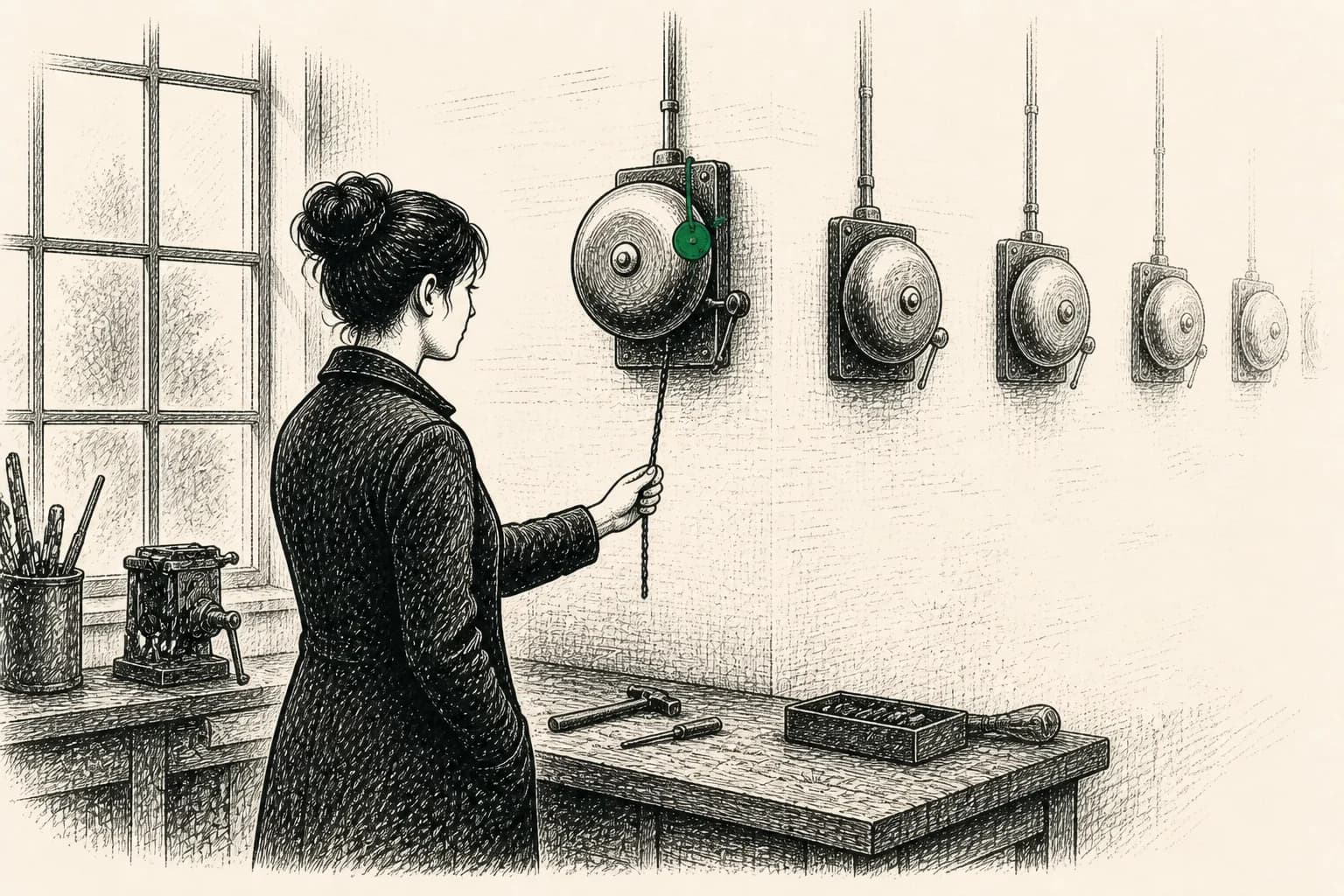
“It is lower” is movement. For the completion of a particular target, I do not stop at lower.
I ask the person to imagine the scene again: the same faces, words and details that previously activated the emotion. I ask them to try to reproduce the old response.
If it was four, is now zero, and the former emotion cannot be brought back, that is a result for this specific scene.
The person still remembers what happened. They may still judge the behaviour as wrong. The memory has not been deleted. The automatic emotional response to it has changed.
Zero for one scene means zero for one scene
This is where claims can become larger than the evidence.
One scene reaches zero. Excellent. That does not prove that the entire anxious pattern has been resolved.
Other memories may remain. The words may no longer activate the person, while the tone still does. A physical sensation or another part of the episode may be separate.
I distinguish the specific target, the connected cluster and the person’s wider state.
Completion of one target proves completion of one target—not the whole biography.
Test the imagined future
Once the past scene no longer starts the response, the person imagines a similar situation in the future.
The manager calls them into another meeting. They need to drive out of town. A dog approaches again. What happens now while they picture it?
Does anxiety return? Does the body tighten? Is there an urge to avoid the situation?
If so, more remains. The past memory may have changed while fear of the future exists as another element.
Where a real danger exists, useful information remains. A sensible plan comes first. The aim is to remove the unnecessary automatic response, not the ability to notice risk.
Then test real life
Imagination is valuable, but life is a stricter examiner.
The person actually drives, has the conversation, approaches the lift or sees the dog. A verbal report from the session is not enough. The result has to appear in action.
If someone calmly imagines speaking to their manager but freezes in the meeting, we have found a part that still needs work.
If they go through the situation without the old response and can choose how to act, the change exists outside the session.
A calm week cannot replace the test
A person may have no anxiety for a week because the familiar situation never occurred. The manager was away. There was no long drive. No dog appeared.
The calm week is pleasant. It is not evidence that the signal has changed.
That is why I return to the specific scene, the possible future and, where appropriate, the real situation. The calendar alone cannot do the job.
Track the wider state separately
Alongside testing one response, I use broader measurement over time. A person completes it at the beginning and again after 30, 60 and 90 days. It includes GAD-7, a 16-point working map of the anxiety pattern, the effect on daily life and open questions.
These measures show overall direction and which areas remain elevated.
But they answer a different question. A zero-to-five check shows what happened with one scene. Repeated measures show how the person’s wider condition changes. Combining them into one impressive number would make the result less clear, not more.
Results exist at three levels
The first level is the specific response: it was four, it is now zero, and the old emotion cannot be reproduced.
The second is the connected cluster: nearby memories, alternative entry points and similar situations have been checked.
The third is the wider anxious pattern: measures change over time, ordinary life no longer starts the old system and the person behaves differently.
One target can be complete while work continues on the cluster. Overall functioning can improve while one specific response remains. There is no contradiction; these are different scales.
Questionnaires describe the state; actions describe the life
Numbers matter. They show movement and prevent the beginning from being edited into something milder in retrospect.
But a questionnaire does not drive, have a difficult conversation or set a boundary.
The final check therefore returns to life. The person remembers the past without the old response, imagines the future without entering the same automatic route, and can act more freely in the real situation. Broader measures confirm that this was not one unusually good hour.
Then I can say something more precise than “It feels better.”
This response has changed. This connected cluster has been checked. And here is what still requires work.