
Ugis Strauss
Founder of The Off-Switch Method
A background in behavior under pressure, private 1:1 client work, structured method development, and field application under real emotional load.
Ugis Strauss developed The Off-Switch Method from nearly three decades of applied work with individuals, teams, and organizations under pressure.
I came to this method because I kept seeing the same gap: people could understand their reactions very well, and still be carried by the same reaction in the moment.
Private 1:1 work spans 15+ years and hundreds of clients, beginning in coaching and developing into the structured Off-Switch Method work.
The method addresses patterns that keep firing even after people understand them: stress, overload, trauma load, emotional triggers, and reactions that do not yield to insight.
Training, business games, and behavior under pressure
Before The Off-Switch Method, a substantial part of my professional life was built around corporate training, business games, and simulations.
For many years, I created and delivered programs where leaders and teams did not simply listen to theory. They entered a live management environment: making decisions, negotiating, meeting uncertainty, competition, responsibility, conflicting interests, and time pressure.
For me, this was always more than skills training. In a well-designed business game, it quickly becomes visible how a person behaves not in a calm conversation, but in the moment when there is risk, responsibility, limited information, and a need to act.
That is where I kept seeing the same important gap: a person may understand the right answer, know the model, and agree with the logic — but under pressure still return to the old reaction.
This experience became one of the professional foundations of my approach. The Off-Switch Method grew not only from individual work with anxiety, stress, and emotional triggers, but also from years of observing how people, teams, and leaders act inside complex systems.
Professional credibility at a glance
Before The Off-Switch Method, this work lived in executive training, business simulations, leadership programs, crisis decision games, institutional education, training organizations, and private 1:1 client work. Programs were delivered across 15+ countries.
28+ years
Applied behavior-under-pressure work
15+ years
Private 1:1 work
Hundreds
Private 1:1 clients
120+
Trainers certified
20+
Proprietary simulations built
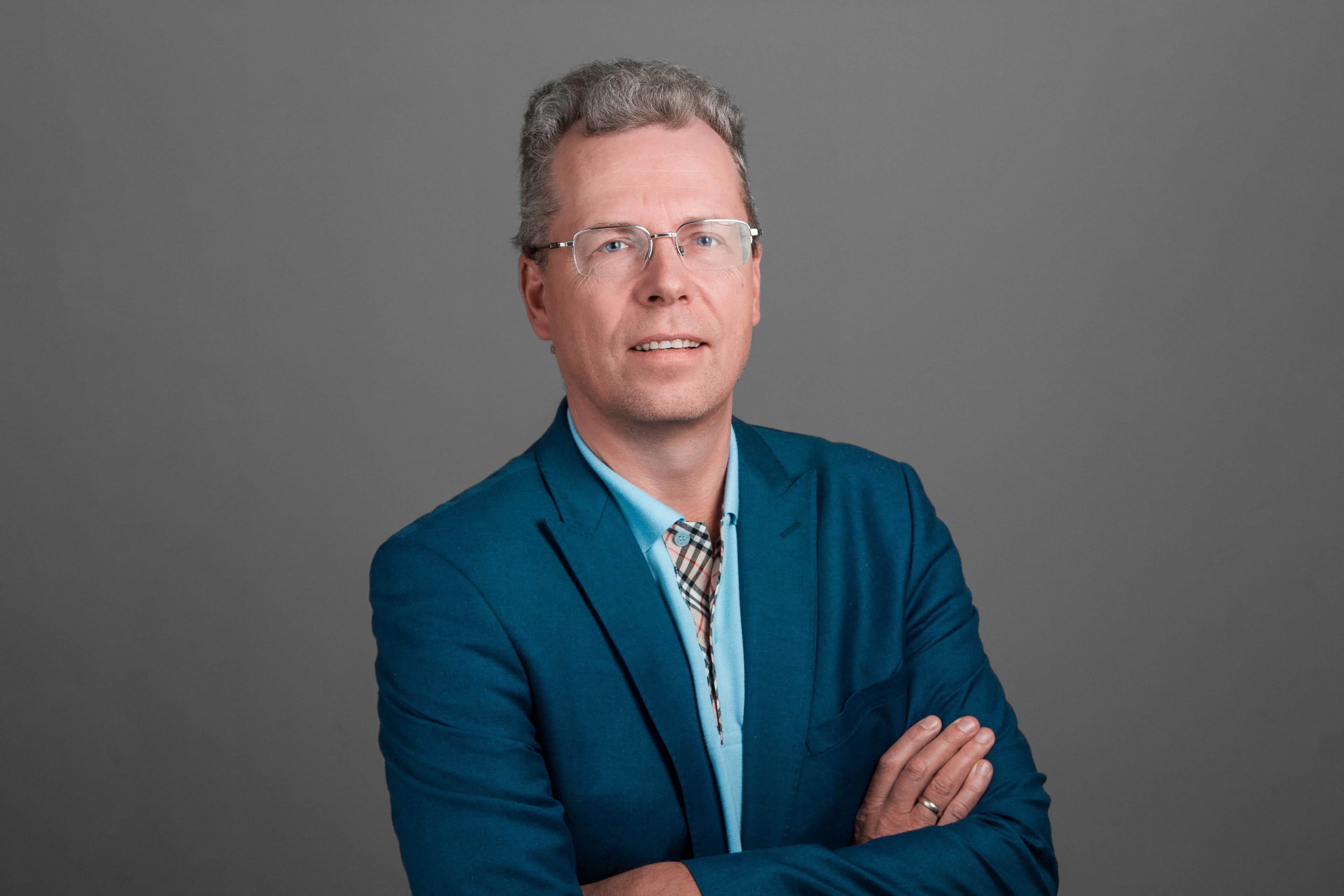
Ugis Strauss
Founder of The Off-Switch Method
A background in behavior under pressure
The Off-Switch Method did not emerge from theory alone. It developed through decades of applied work with people and groups under stress, consequence, uncertainty, and emotional load.
For years, Ugis designed simulations where people could not hide behind explanations — their real patterns appeared under pressure: decision ownership, avoidance, rescue behavior, conflict, governance failure, negotiation habits. The same principle informs the method: do not argue with the explanation; observe the reaction pattern, intervene, and test whether the system changes.
Beyond delivering programs, the work has involved building and managing training organizations, developing trainer networks, certifying trainers, and designing repeatable delivery systems across countries. This matters because the Off-Switch Method is not only a personal technique. It is a structured delivery system: observable target, repeatable process, measurable change, and defined endpoint.
28+ years
Applied work with individuals and organizations under pressure
Sustained practice across individual and group settings — developing and refining what became the Off-Switch Method.
20+ years
Management simulations and training organization building
Built and led simulation-based management programs across 15+ countries. Designed and managed training organizations, trainer certification networks, and repeatable delivery systems, with 120+ management trainers certified.
15+ years
Private 1:1 work with hundreds of clients
Started in coaching and developed into structured private 1:1 work with anxiety, pressure, emotional triggers, burnout, and recurring reaction patterns.
Development
The Off-Switch Method
The method became a structured process with defined phases, clear completion criteria, and a practical endpoint: the work is designed to reduce dependence on ongoing sessions, not create it.
2022
Ukraine field application
Free online program for Ukrainians experiencing active war trauma. Six cohorts, six months, approximately 7,000 participants, around 80% of them inside Ukraine during active hostilities. Documented symptom reduction in completed cohorts.
Professional ground
Simulation architect
28+ years designing environments where decisions, conflict, avoidance, ownership, and pressure responses become visible. Programs delivered across 15+ countries, with 20+ proprietary simulations in active portfolio.
Training organization builder
Built and managed training organizations and trainer networks across countries. Designed repeatable delivery systems where structured methods could be taught, certified, and reproduced beyond a single practitioner.
Train-the-trainer systems
Designed a one-year internal trainer certification concept, curriculum, and delivery system. Over 120 management trainers certified for institutional and corporate clients.
Institutional educator
Lecturer and program architect at BA School of Business and Finance since 2008. Built and delivered entrepreneurship and business simulation programs for EU students, including Riga Business Week / Erasmus entrepreneurship simulations.
Organizational behavior under pressure
Programs designed for leadership under pressure, negotiation, governance, transformation, delegation, crisis decision-making, trust, and cross-cultural collaboration.
Field application
The Ukraine 2022 program applied the method at scale — approximately 7,000 participants, around 80% inside Ukraine during active hostilities, with structured measurement and practitioner uptake.
Selected earlier professional contexts
Earlier simulation, training, and organizational design work — not Off-Switch Method delivery — across corporate, institutional, and educational contexts.
Consumer & retail
IKEA, Coca-Cola, Procter & Gamble, Rimi, Stockmann, JYSK
Pharmaceutical & life sciences
Abbott Laboratories, AstraZeneca, GlaxoSmithKline, Boehringer Ingelheim
Banking & finance
SEB Bank, Swedbank, Nordea Bank, Home Credit Bank
Technology, telecom, industry
Hewlett Packard, Siemens, Tele2, TeliaSonera, ABB, Harsco
Institutional & public sector
British Council, EU PHARE, Latvian Ministry of Education
Education & academic
Stockholm School of Economics, BA School of Business and Finance, Bizness24h, Riga Business Week / Erasmus entrepreneurship simulations
These references describe Ugis’s earlier simulation, training, and organizational design work. They do not represent Off-Switch Method clients, endorsements, evaluations, or outcomes.
How the method developed
The method developed from a repeated observation: people could understand the reason for their reaction and still keep reacting.
The work became focused on the reaction itself, not the explanation. Insight is real and useful — on its own, it does not always change the pattern that fires under pressure.
From that observation, the method became a structured sequence: reduce accumulated emotional load first, address deeper material without destabilizing the client, and end when the reaction no longer drives the same response. Sequence, clear measurement, and a defined endpoint are shaped by the prior simulation, training, organizational work, and private 1:1 client work.
It is not an open-ended support model. Not a substitute for medical, psychiatric, emergency, or crisis care.
Ukraine 2022
The Ukraine application did not create the method. It stress-tested it at scale.
In 2022, following Russia’s full invasion of Ukraine, the method was applied as a free online program for Ukrainians experiencing active war trauma. It ran for six months, across six cohort groups, with approximately 7,000 participants — around 80% of them inside Ukraine during active hostilities.
Twenty Ukrainian therapists, psychologists, and medical doctors participated in the program, requested training in the method, and joined the delivery team.
Measured completed cohorts showed substantial symptom reduction, with the full evidence and limitations documented separately.
Read the documented Ukraine field application →Why the method is structured as it is
Sequence
Emotional load is reduced before deeper material is addressed. The order is part of the mechanism.
Measurement
Progress is tracked through observable response change, not general impression.
Endpoint
The work ends when the original reaction no longer drives the person in the same way.
Where this work now applies
Today, the method is applied in focused private 1:1 work, institutional contexts, and professional referral or collaboration settings.
Private 1:1 work
For individuals dealing with recurring anxiety, trauma-driven reactions, panic, emotional triggers, burnout, overload, and persistent reaction patterns.
Institutional application
For organizations supporting teams under pressure, crisis exposure, burnout risk, or accumulated emotional load.
Professional referral and collaboration
For practitioners, clinicians, and institutional partners with a serious interest in referral, training, or structured application.
Start with a conversation
Private 1:1 work begins with a 45-minute conversation: a clear look at your situation, what has already been tried, whether the method fits, and what the next step would involve.