Work is over. The phone is face down. Nobody is asking for anything.
The person sits on the sofa while the whole body remains at work. Shoulders lifted. Next task already running in the mind. Even rest becomes a project: relax correctly, preferably by 9:30.
If you cannot relax, it does not necessarily mean you have failed to learn leisure. In my work I distinguish at least three tasks: accumulated tension, a specific event that still activates it and a life organised so that switching off never actually happens.
They can coexist. Telling all three to “take a deep breath” is unlikely to impress them.
Sometimes the system is still waiting for the next blow
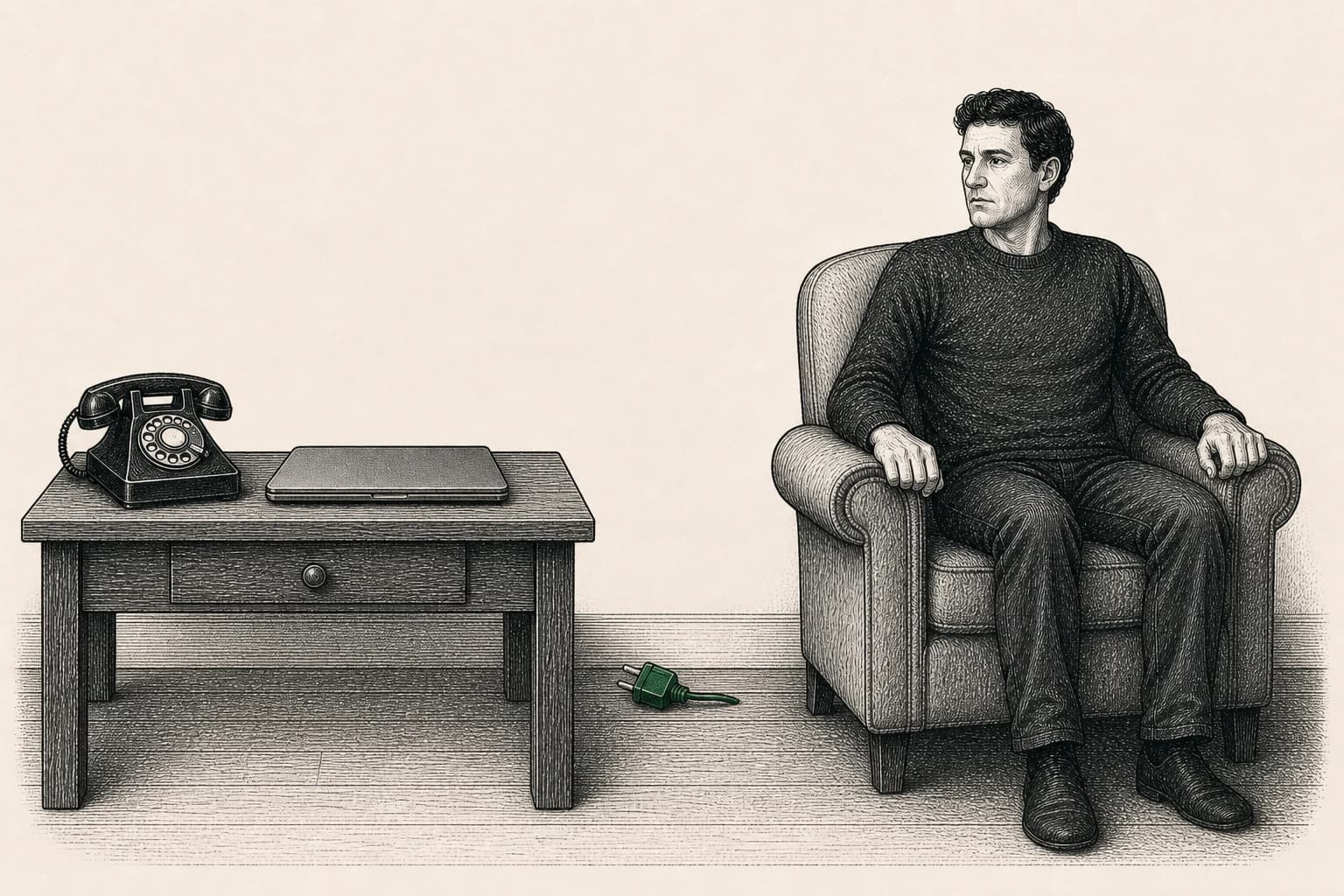
Devices may be switched off while the body remains ready.
Imagine a child who is bullied at school. The body tenses when danger arrives, then gradually settles when the danger ends. If the same thing happens repeatedly, staying prepared can become more familiar than relaxing.
The blows need not be physical. Humiliation, criticism and unpredictable conflict can also leave emotional and bodily responses.
I sometimes say that “the body remembers.” This is a working metaphor, not a claim that muscles contain a literal archive. The point is that an event ended while the tense state became familiar enough for calm to feel unusual—or unsafe.
A weekend does not automatically remove that background. Today’s task is gone; the accumulated load came to the sofa.
Sometimes the structure of today never permits an ending
Consider a manager who answers calls, messages and email all day. At home, everybody can interrupt. The manager helps whoever asks and repeatedly abandons the task already in progress.
In the evening they say, “I cannot switch off.”
When, exactly, was the system given a clear signal that access had ended?
This is not only an emotional question. It is a design problem. The answer may include:
- protected time for one important task;
- notifications that are actually off;
- periods of unavailability;
- prioritising what matters rather than what makes the loudest noise;
- boundaries at work and at home.
An emotional practice cannot switch off a phone the person has agreed to answer around the clock. Nor can it manufacture focused time inside a calendar that has donated every free minute to somebody else.
Sometimes one particular story remains active
A conflict continues internally. Tomorrow’s dismissal is imagined in such detail that it is experienced today. One old event rises whenever the room becomes quiet.
General relaxation then misses the target. We need the specific scene:
- What happened?
- What repeats now?
- Which image or thought activates the tension?
- Is there a real task still to complete?
If a conflict remains unfinished in life, it may need a conversation or action. If the plan already exists, the remaining response can be tested separately. Removing emotional charge is not a substitute for a boundary, and drawing a boundary does not automatically change every old response around it.
Where I begin
I do not begin with the heaviest event available.
First, the person learns to reduce a current response and recover some manageability. Then we work with what maintains the general background and gradually approach specific events, imagined futures and the organisation of the present day.
The pace depends on what the person can currently tolerate and what genuinely needs attention.
Sending somebody into heavy material before they can return to a steadier state is not courage. First they need an off-switch; then comes careful work with what keeps turning the tension on.
Relaxation cannot become another obligation
People can make rest into an examination.
“I used the practice. Why am I not relaxed yet?”
Because the state may have more than one layer. The background came down but a conflict remained. The conflict changed but the day is still organised like an emergency control room. A pause appeared and the person noticed, perhaps for the first time, how unfamiliar calm had become.
Physical and medical causes, substance use, medication effects, continuing danger and severe sleep difficulties also require appropriate professional assessment. The Method is not a replacement for medical or mental-health care.
My result is therefore modest and testable: the person can relax more.
Not always, and not on command. But rest stops being an inaccessible state. On an ordinary evening or weekend, an activity can end not only in the calendar, but inside the person as well.