You understand the pattern. Your response has other plans
You can spend years understanding why conflict frightens you. You may know how each parent shaped the pattern, why authority makes you feel smaller, why certain relationships feel familiar and why pleasing everyone became a full-time position you never applied for. The explanation may be both accurate and deeply useful.
Then a manager raises their voice. Your chest tightens, the words vanish and you want to agree, justify yourself, smile or leave. Twenty minutes later, the perfect reply arrives with its customary impeccable timing. You wonder why the same thing happened again when you understand it so well.
Because insight and an automatic reaction are different operations. Your understanding can be entirely genuine while the response begins before the part of you that can use it has come online.
A map can orient you. It cannot switch off the response
The map may be new while the automatic route still follows an old groove.
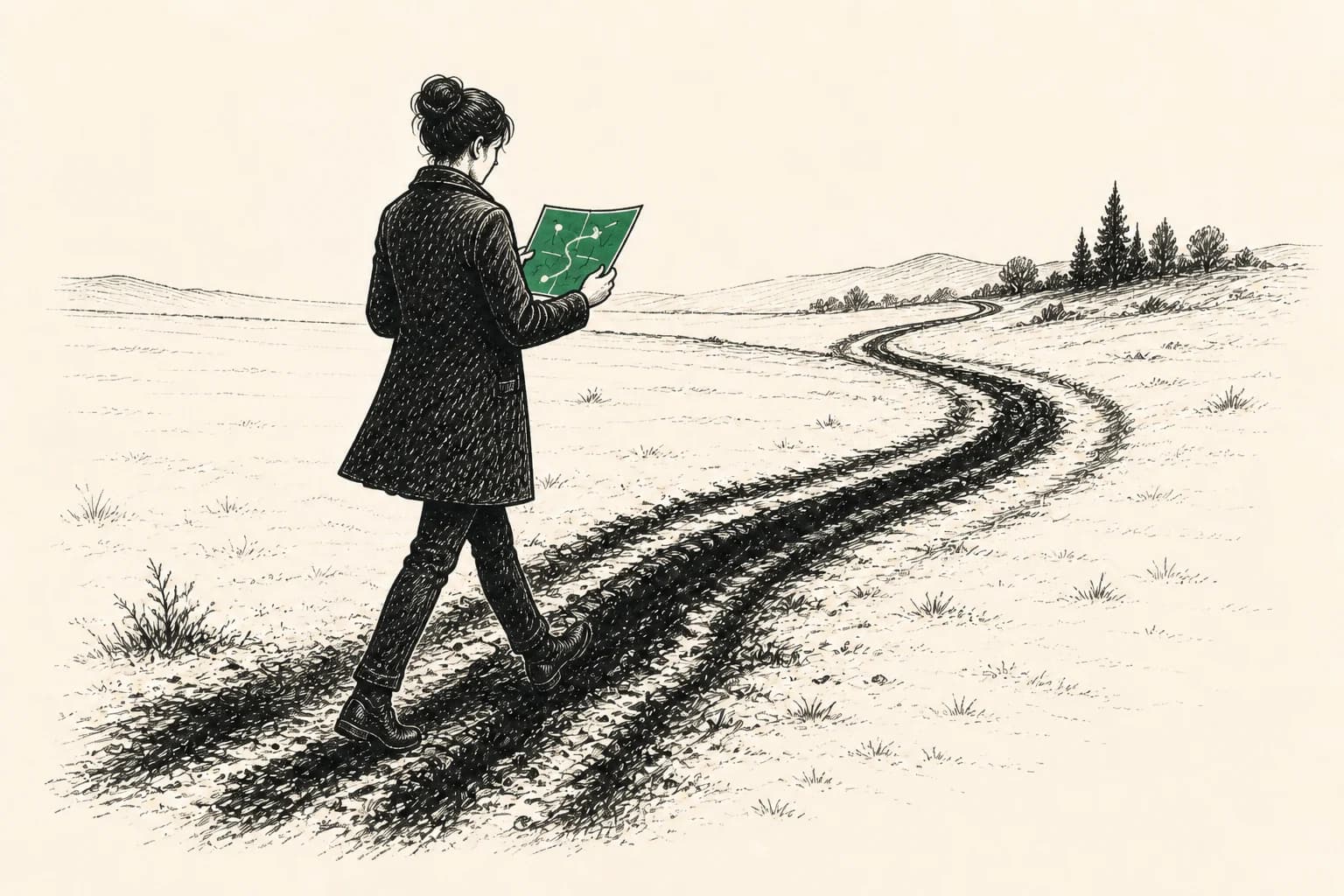
It is reasonable to expect that once you know where a reaction came from, it should disappear. Sometimes it does soften. Often it does not. Insight can replace self-blame with context, reveal a pattern and give you language for what happens. All of that matters. But describing a mechanism, however elegantly, is not the same as changing it.
You may remind yourself that your manager is not your father, your partner is not your mother and you are no longer the child who had no choice. Every sentence may be true. Yet a look, a pause, a tone of voice, a closed door or an image of the future can start the old physical response before your reasoning has found its notes.
You have not failed to understand. You are trying to answer an automatic response with an argument.
The present situation may be the button, not the whole mechanism
A manager sounds sharper than usual. A partner does not answer a message. A client sends a difficult email. You picture having no money six months from now. The present event may be real and may require a real response. At the same time, something in it can match an older pattern closely enough to activate the old response.
signal now → old meaning → physical response → habitual action → the same problem againThe signal may be a voice. The older meaning may be “I am about to be destroyed,” “I cannot disagree,” or “If they do not like me, I will be left.” The response may be heat, pressure, a blank mind, anger or freezing. The familiar action follows: agree, attack, explain, withdraw, control, or smile while everything inside says no.
This does not mean that every problem lives inside you. No technique converts a bad manager into a good one. Sometimes the job, relationship or wider structure needs to change. The useful question is whether you can assess that reality freely, or whether an older response has already taken over the decision.
Memory does not always arrive as a story
Memory rarely arrives with a date, a title card and a complete scene. It may appear as the urge to disappear, the need to be liked, anger followed by shame, an inability to say a simple no, or the feeling of shrinking beside someone with authority. What returns is not always a narrative. Often it is a position, a sensation or an impulse.
Talking about the past can be valuable. It can name what happened, put responsibility where it belongs and reduce misplaced self-blame. But describing a fire and putting it out are different tasks. Reconstructing the same images, voices and sensations again and again can become another rehearsal of the response rather than a change in it.
The past belongs in the past. It should not keep setting your body's daily agenda.
Sometimes the reaction did not return. The background never left
It can feel as though anxiety disappeared and then returned. But several pressures may have been active at once: a report, money, work, a relationship and the future. Finishing the report removes the loudest item and brings relief. It does not tell us whether the rest of the background has changed.
That is why one good day is welcome, but it is not the endpoint. First you learn to interrupt individual waves. Then the work turns to what keeps producing them. Change is tested against the same image, memory or real situation, not inferred from a temporary absence of pressure.
You do not need to find one perfect root cause
It is tempting to search for the one decisive event that explains everything. Sometimes there is a powerful central episode. Even then, later layers may gather around it: fear of the reaction itself, avoidance, a second failure or an image of the next catastrophe. More often, the material resembles a warehouse rather than a single root.
I do not begin by treating the biography as a mystery that must be solved before anything can change. First a bulldozer, then a scalpel: we reduce the accessible load systematically. What still activates the response then becomes clearer, allowing more precise work.
First stabilize. Then address what keeps the reaction active
When someone arrives with anxiety, poor sleep, pressure at work, fear about money and tension at home, I do not select the most dramatic story in the first minute. At that point, there may be no useful first target. There is a first stage: learn to manage the state well enough that the heaviest material no longer controls the process.
- Notice the reaction while it is happening.
- Reduce it instead of debating with it.
- Repeat this when several reactions appear together.
- Move to heavier material only when you can come back out of it.
- Test what remains in imagination and in real life.
Then we can distinguish reaction, skill and structure
If you can calmly plan a conversation but freeze when the person is in front of you, a reaction is blocking access to the skill. If you do not know what to say even when calm, the skill may need to be learned. If the reaction has changed and the workplace remains destructive, the structure may need to change.
Changing the old response does not automatically build a new life. It creates enough room to see what the next task actually is. That is how I assess change: not by whether the explanation has become more elegant, but by whether the same signal still produces the same automatic answer.