The message has been read. There is no reply.
Twenty minutes pass. Or an hour. Or several hours.
Factually, the person knows one thing: no reply has arrived. Internally, a full film is already in production.
They no longer love me. I did something wrong. There is somebody else. I am about to be left. The relationship is ending.
The person checks the phone, checks the status and sends another message. They may demand an answer, accuse, retaliate with silence or decide to leave first.
There are still no new facts.
The central question is not why people sometimes remain silent—there are a million possible reasons. It is why one small signal today can start a response far larger than the signal itself.
There is no reply, but internally everything has ended
Silence has not proved departure, but imagination may already have completed it.
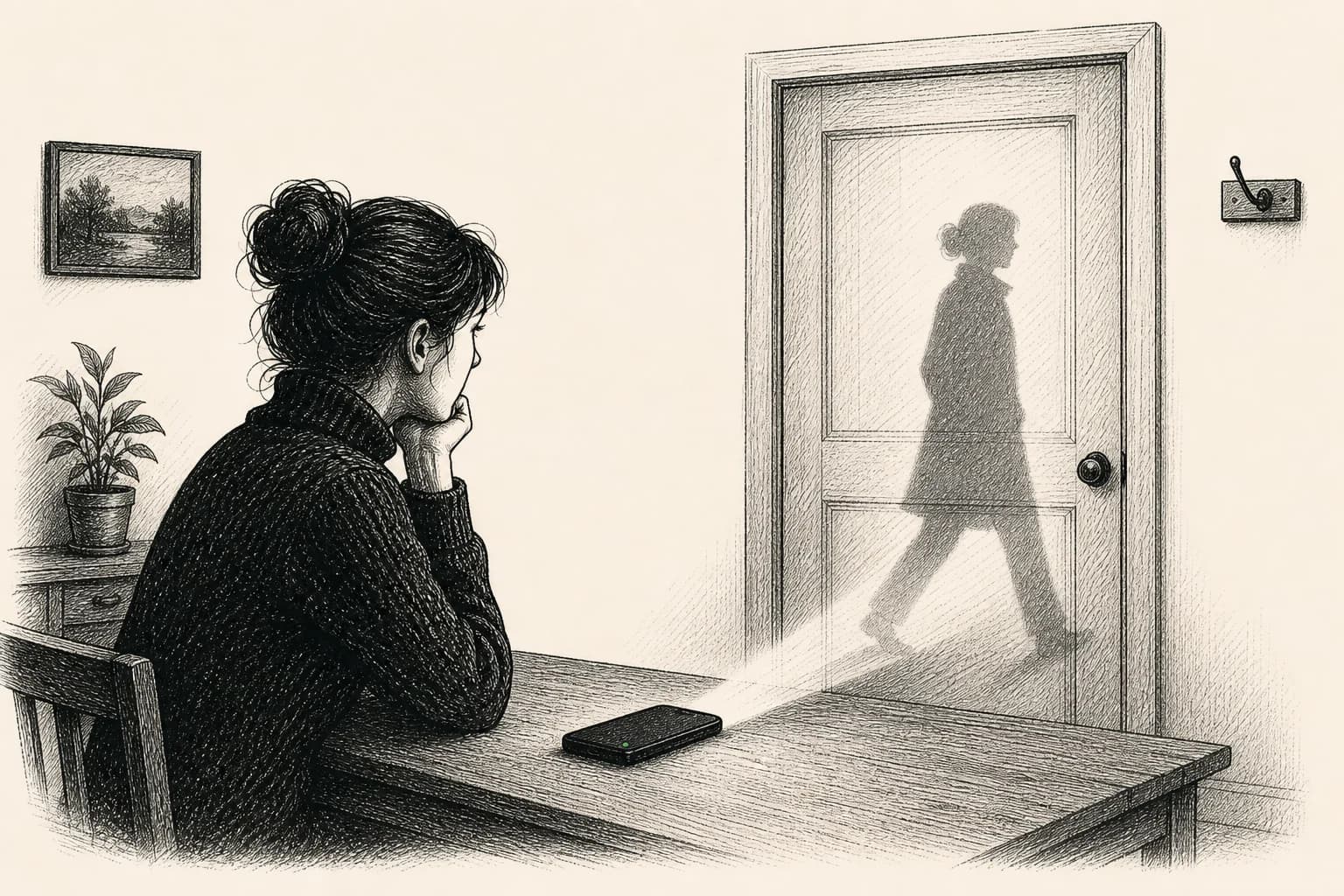
Between fact and response, an entire story has appeared.
Fact: there is no reply yet.
Story: I am being rejected; what happened before is happening again; I will be alone.
The person is no longer responding only to the absent message. They are responding to the end of the relationship already imagined.
Today's silence is real. Betrayal, separation and loneliness may exist only in the future picture.
The picture can be large, colourful and more persuasive than reality. The real person has not answered. The internal version has already destroyed everything and left the country.
Today's partner can receive a response created by earlier people
A delayed answer rarely exists in isolation from the rest of life.
There may have been family silence, a parental separation, earlier relationships, betrayal or someone who disappeared without explanation. Not everyone has the same history, and not every item needs to be present.
But if distance previously meant pain, today's pause may carry more than today's question.
The next partner should not receive a response built by all the earlier people.
That does not prove the current partner is blameless. It means we need to separate how much belongs to this situation and how much arrived from previous relationships.
Sometimes a new partner's socks are not only socks
I use a simple example.
In an earlier relationship, a partner drank, left socks everywhere and became aggressive. Alcohol, socks, fear, helplessness and anger became one history.
That relationship ends. A new partner neither drinks nor becomes aggressive. They simply leave their socks in the wrong place.
The whole response arrives: anger, helplessness and expectation of what will happen next. The new person receives the bill for the old person's behaviour.
Silence can work similarly. Today's delayed reply may activate everything previously connected with distance or threatened loss.
Socks can be a real domestic irritation; silence can be a real relationship problem. The force of the response still may not describe only what is happening today.
The person also responds to their own painful future
The past provides material. The imagined future continues it efficiently.
The person remembers being left and pictures it happening again. They begin experiencing future pain now.
Avoiding betrayal can become more urgent than remaining in contact. One person clings and controls; another becomes cold; another searches for faults; another creates a conflict or leaves first.
The behaviours differ. The structure may be the same: defence not only from today's pause, but from a future already shown internally in considerable detail.
Fear of loss can create a real conflict
Five messages arrive in succession. The person demands an immediate response, monitors online status or makes accusations before hearing an explanation. Or they disappear in return and wait to be pursued.
From their perspective, this prevents loss. To the partner, it can feel like pressure, control or punishment.
A real conflict then develops. The partner may withdraw in response. That withdrawal looks like proof: *I knew relationships were unsafe.*
An old response has helped create a new conflict, which then becomes new evidence for the old conclusion.
I separate three things
What feels like one large anxiety contains at least three possible parts:
- Today's signal: the unread or unanswered message, changed tone, distance or actual behaviour.
- Earlier situations activated with that signal.
- The painful future already imagined and experienced in advance.
The first step is learning to regulate the present response so it does not carry the person away. Then we work gradually with accessible past scenes and the feared future.
I may ask the person to imagine the exact silence, face, message or future conversation. What happens? Where does anxiety appear? What are they already seeing next?
If one scene opens another, the connected chain is addressed. I do not need one perfect root cause. I need today's pause to stop activating the entire old collection automatically.
I deliberately test the same response again
Feeling better during the conversation is not enough.
We return to the same pause and check for the old memory, physical response, fear of abandonment and urge to message or disappear first.
When the imagined pause no longer starts the old film, life provides the next test. People close to us will still occasionally answer late. The aim is not a partner who supplies round-the-clock proof of safety. It is a pause that no longer governs the person in place of facts.
Removing the old response does not make the partner good
If much of the anxiety came from the past, today's silence is not automatically acceptable.
People can avoid conversations, manipulate through distance, punish with silence or behave coldly. My work is not to say, “This is all your trauma; continue tolerating it.”
But present behaviour is difficult to assess while old relationships and an imagined future are both shouting.
After the additional charge reduces, the person can ask directly, observe whether the behaviour repeats and decide whether a boundary is needed.
I test the film that silence starts—not silence in general
I begin with one unanswered message and the precise film that starts inside: they have lost interest, found someone else, are punishing me, or are about to leave. Silence is the button; the internally completed ending is the response.
We work with the old scenes and imagined future that feed that film, then show the same silent phone again. Can the person remain with the facts—there is no reply yet—without living through a separation that has not occurred?
No reply is information with a blank space. The old response writes a feature-length ending in it.
Afterwards, the relationship still needs evidence and conversation. Removing an old response does not certify the partner as reliable, nor does it make silence acceptable. It allows today’s relationship to be judged by today’s behaviour.
The result is not indifference
The relationship can remain important. Unpleasant behaviour remains visible.
The result is that a pause does not become catastrophe automatically. The person can wait for facts, ask what is happening and hear the real answer rather than only their own film.
They can still set a boundary or leave if a genuine problem exists. The difference is that today's relationship is finally being assessed on today's evidence.