Why is one slow person merely slow while another produces rage in seconds?
They may only be taking too long to formulate a simple thought. Yet the body tightens, the voice hardens and the urge arrives to interrupt, complete the sentence or explain the cost to civilisation.
You may have decided to remain calm today. A sensible plan. The response began first.
One person is irritating an entire type
Different people may be assigned the same old mask.
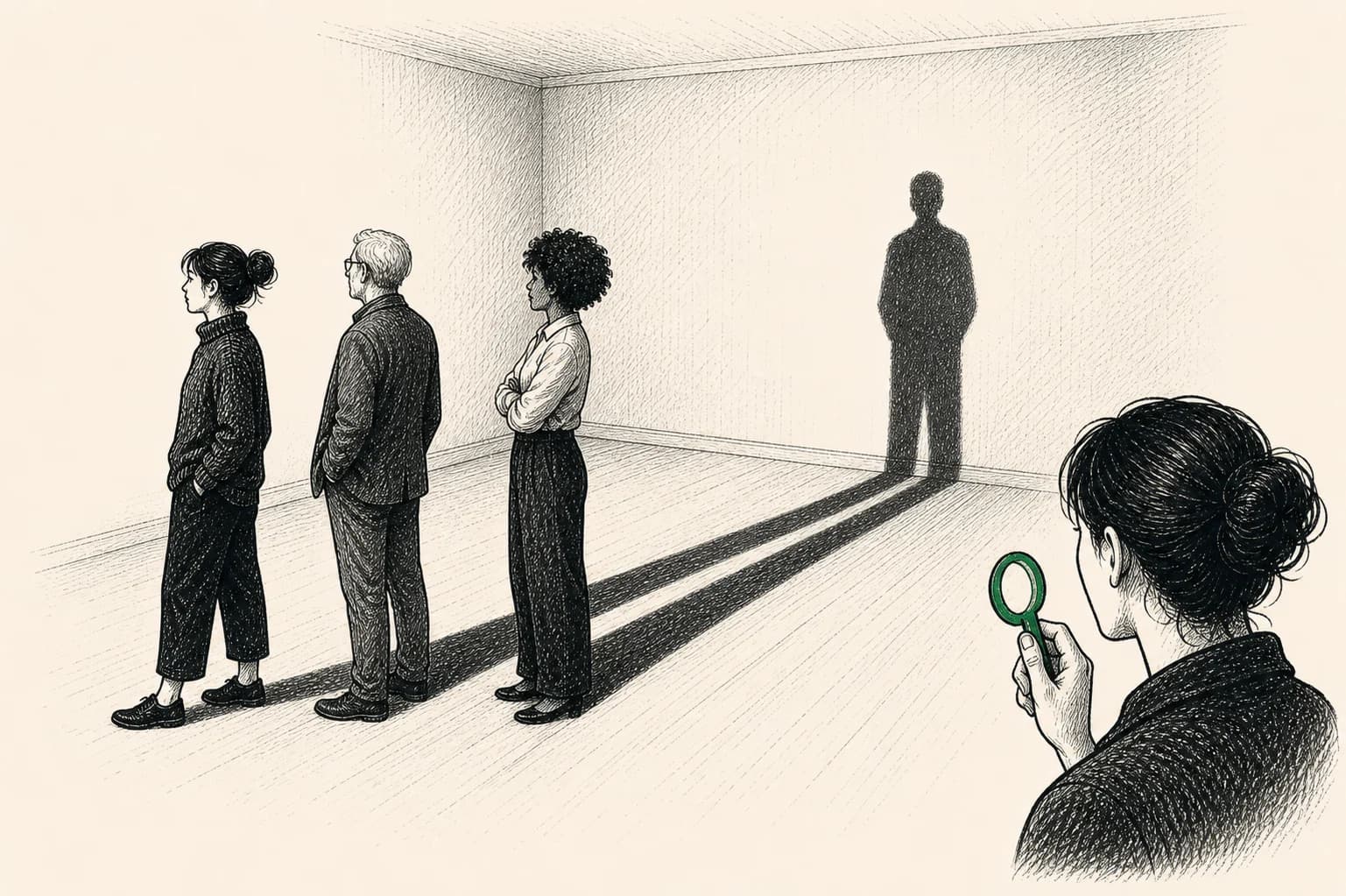
For someone it is slow people, for another controlling people, for another people who appear helpless.
The individuals differ in age, work and relationship to you, while the internal answer remains curiously similar.
The present person may genuinely be slow and obstruct work. That fact still does not explain why one slow person is manageable and another starts a fire in three seconds.
When different people in one apparent type start the same response, the system may already have grouped them together.
The category may have begun with one person
There may once have been one slow, controlling or helpless person beside whom the response became particularly strong.
Then came another similar episode, then another. Gradually, the reaction began beside anyone filed in the same internal folder.
Consciously, you know this person is different. The automatic response does not pause to read the biography and verify identification.
It recognised something familiar and proceeded.
The shared feature may not be the one you named
“Slow people irritate me” is a working label. It does not prove speed is the signal.
The connection may be an intonation, posture, height, way of standing or several words. The person can be entirely different in character and use one familiar tone.
The visible trait and the internal common signal need not be identical. *Slow, controlling, helpless* may be the conscious explanation, not the feature that built the category.
Sometimes the system calculates two plus two as eighteen
That is my ordinary working formula.
One person had a hard voice, another held the head similarly, a third used familiar words. The content and people differ; the automatic system grouped them.
Mathematically unpromising. Emotionally real.
I do not build a universal typology of irritating people. Each chain may be different, and an automatic association has no duty to be logically elegant.
The response begins before the decision
A knee reflex does not attend the meeting where you decided to remain calm.
It helps to separate:
- Assessment: I may genuinely dislike how this person works or behaves.
- Automatic response: intensity rises before I choose how to act.
- Action: interrupt, shout, argue—or follow a deliberate plan.
Automatic response does not excuse harmful action. But while all three are fused, the person tries to stop a pre-decision response using a conscious order issued afterwards.
My aim is not to prohibit anger. It is to stop one automatic response removing choice.
Overload amplifies the same signal
On one day the same type is irritating but manageable. On another, one tone is enough.
Parallel tasks, accumulated tension and current stress can amplify the connection. Rest may therefore reduce intensity without proving that tiredness caused the whole response.
Current stress can be an amplifier rather than the complete cause.
I do not guess the original cause from the type
“Controlling people irritate me” does not justify assigning a controlling parent by return post.
We take one present episode. What exactly starts the response: look, voice, phrase, posture or helplessness? Work with what becomes accessible and test the same situation again.
If the response remains, continue. If it changes, test beside the same signal—not through admiration for the explanation.
No automatic explosion does not mean agreement
The other person may still delay, control or refuse responsibility.
Less automatic anger makes it possible to object, limit contact, conduct the conversation or follow the chosen plan.
Not shouting does not mean having no boundary. Calm is not tolerance. Firmness can remain after the part that acted before choice is gone.
I work with the button—not with a type of person
I choose one person and one precise feature that starts the response: the voice, pause, expression, posture or way of taking space. The category ‘people like that’ is usually too large to be useful.
We find the scenes that actually appear around that signal and reduce the old response attached to them. Then I show several different people who share the feature and check whether they still receive the same historical mask.
Different people may press the same old button. That does not make them the same person.
When the automatic explosion is gone, disagreement remains available. The person can decide that someone is rude, unsafe or simply exhausting without the reaction making the decision before the evidence arrives.
The result begins where choice returns
Imagine the same type of person and the same situation. Can you follow your plan, object firmly and remain free of automatic explosion?
Then test this in life.
Zero applies to this response—not a promise never to feel anger. The change is that beside the familiar type, you decide whether to continue, refuse, create distance or end the contact.