For years, a person avoided one important decision. Every time it appeared, uncertainty arrived first, followed by several bad versions of the future and a strong preference for postponing the matter until next week—or the next life.
Then the response changed.
The person looks at the same possibility and no longer feels fear. Nothing contracts. There is no urge to escape.
Surely this is the moment to stand up confidently and begin the excellent new life advertised in the brochure.
Instead, the person sits there and asks, “All right. What now?”
Then comes the more troubling question: if nothing happened automatically, did we fail to remove everything?
This confuses two different jobs. An old response can genuinely end. A new action, skill and direction do not have to appear in the same second.
Clearing can complete the old
I test whether the former response still reproduces. The person imagines the situation that once activated it, notices what happens, and later meets a comparable situation in life.
Fear no longer arrives. Uncertainty no longer takes control. The old automatic answer does not force silence, agreement, escape or delay.
That is a substantial result. It should not be dismissed because the cleared space has not immediately grown furniture.
Freedom not to repeat the old is real. It is not yet an instruction for what to do instead.
Removing uncertainty does not install confidence
Previously, uncertainty answered before the person could:
Do not try. It will fail. Wait. Say nothing.
When that response no longer starts, why would confidence automatically take its place? They are different things.
Removing automatic submission does not create a position. Removing fear of making the wrong decision does not choose the right one. Removing an old script does not deliver a new script in an attractive envelope.
Clearing removes the former answer. It does not select a new one on the person’s behalf.
The old house is gone; the new house is not there yet
Cleared space is not yet a new life.
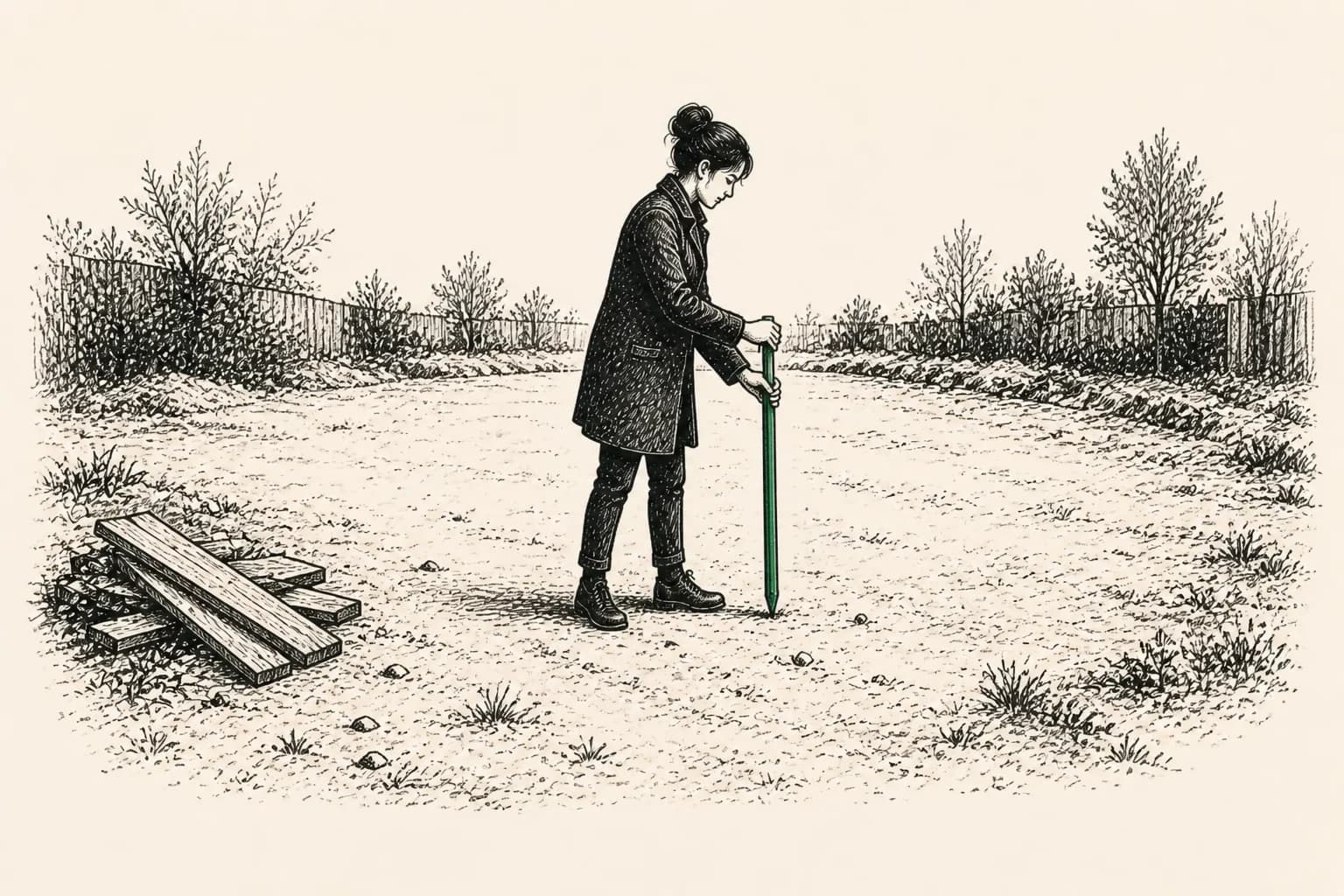
My metaphor is simple. Before a new house can be built, a collapsing old house may need to come down.
The demolition is finished. The debris is removed. There is a clear building site.
Looking at the site and saying “It is empty, so the work failed” would be inaccurate. The old house is genuinely gone. It no longer occupies the space, drops pieces on people or forces them through the same crooked corridors.
The clear site is simply not a new house.
I call this state zero. The old automatic way no longer functions and the new one is not yet built. In between, real choice becomes possible.
This can feel calm, disorienting or merely unfamiliar. The absence of an instant new answer does not prove that the old response remains.
Sometimes “I do not know” is new honesty
Fear, anxiety or difficult history may have organised a large part of a person’s attention. The question of what they wanted had little room to appear.
Fear at least supplied directions: avoid this person, do not enter that door, agree here, remain silent there.
A bad direction is still a direction.
When it disappears, the compass does not automatically rotate towards a single true purpose. Sometimes “I do not know yet” is more accurate than another elegant theory about the self.
The practitioner should not rush to fill that zero with their own model. It is not my job to decide who somebody should become, where they should live or what they ought to want.
Neutrality can be mistaken for unfinished work
People become used to personal work having a strong emotion attached. There was fear, anger or a painful memory, so there was an obvious target.
Now the person looks at the same subject and feels nothing intense—but has no new answer either. It is tempting to assume another hidden story must be found.
Sometimes another element really does remain. If the former response reproduces, we work with what appeared.
But if it does not reproduce and the person simply does not know what comes next, searching the past indefinitely will not construct a future. One can continue demolishing a house that is no longer there with impressive dedication.
I separate two tests:
- Does the old response still start?
- If not, what does the person now want to create?
No answer to the second question does not automatically mean hidden trauma is the answer to the first.
At some point, the question turns forward
While the old response controls behaviour, I ask what keeps making the person repeat it.
When the response no longer starts, the question changes: what do you want to create now that it no longer answers for you?
This is construction. It may involve an action, skill, boundary, rule or new role. There is no universal inventory of the correct life.
I can help define a sequence, check whether an old response has returned, identify an obstacle and turn a direction into strategy. I cannot issue a finished life plan—and should not. Replacing an internal controller with an external one would be a dubious renovation.
State zero is where choice begins
When an old response ends, the person is no longer obliged to repeat what once chose for them. That is not a minor or provisional result.
Freedom from the old simply does not arrive bundled with confidence, purpose and a new way of living.
Sometimes the clear building site comes first.
The old house is gone. The new one is not there yet. This is not failure.
It is the place where the person can stop searching the past for another command and begin asking a different question: what should be built now?