Someone makes a small mistake that can be repaired in ten minutes. Everyone else looks, agrees on the correction and continues.
Internally, a different process begins: *I always ruin everything.*
Another error appears, then a third, then old scenes of criticism, shame and punishment.
The person began with one action and within five minutes is evaluating their entire life.
The central distinction is simple:
I did something badly is not the same as I am bad.
One concerns an action. The other condemns the whole person.
The action lasted ten minutes; the verdict can last years
A small repaired error can cast a shadow over an entire identity.
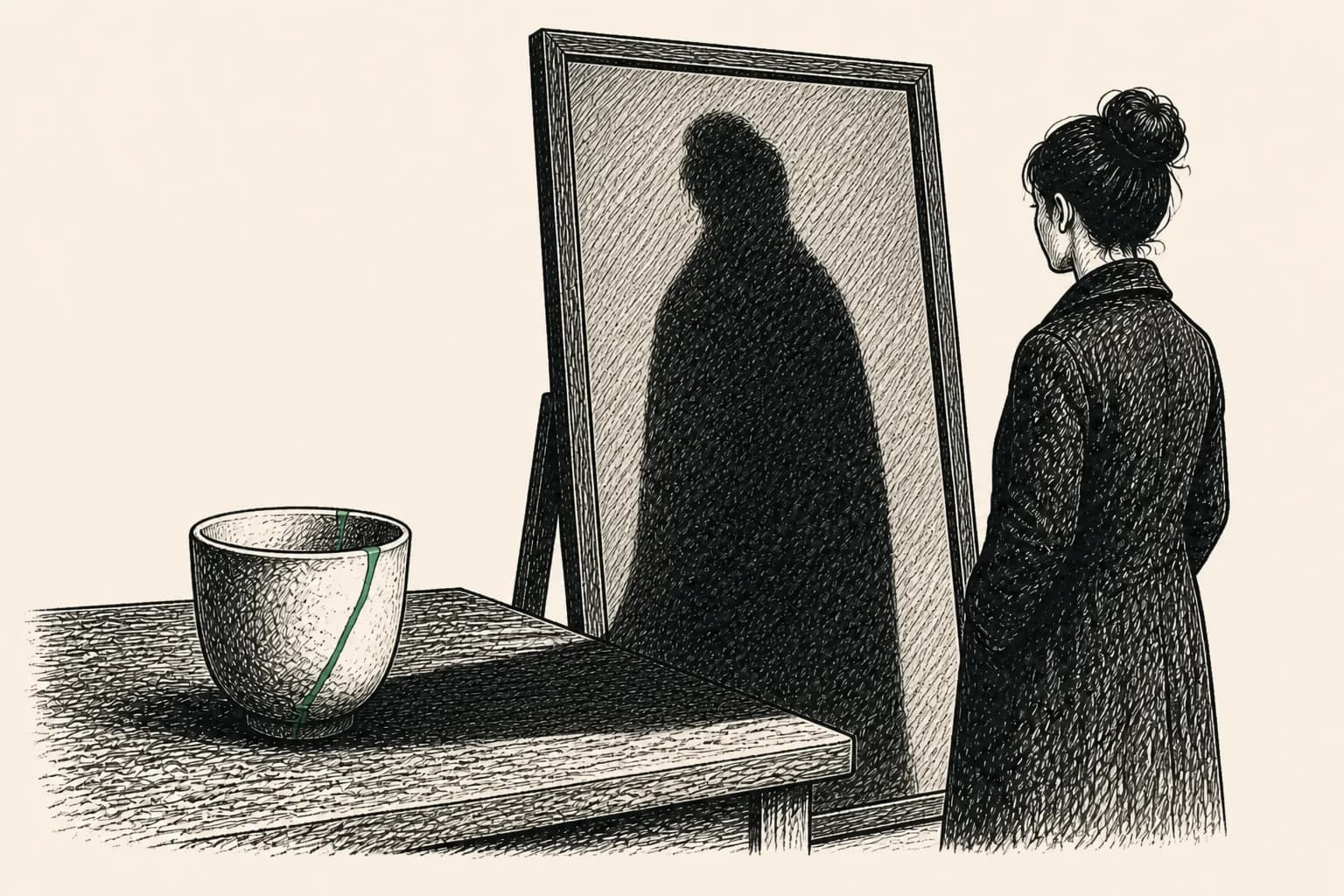
Responsibility may already have been taken: admit, repair and learn.
Yet a broader conclusion remains—not “I made this error,” but “something is wrong with me.”
That conclusion does not improve the action. A specific behaviour cannot be repaired while the whole person is treated as one large mistake.
Responsibility does not require adding, “And I am generally a failure.” That sentence repairs nothing. It turns one episode into evidence against an identity.
One error can bring an entire archive
The present mistake may match older moments in which error meant humiliation, rejection or a global judgement.
Then today's event becomes the entry point to a category: *this is what I am.* One fact pulls other apparent evidence behind it.
This is not proof that every shame response began in one early scene. It is a reason to examine which specific material becomes active now.
Evaluation and identity need separating
Useful evaluation says: this decision failed, this part was careless, this consequence needs repair.
The global verdict says: I am wrong as a person.
The first can guide action. The second usually replaces action with hiding, defensiveness or self-attack.
Removing the verdict does not require positive thinking or declaring the work excellent. Accuracy survives.
Understanding the origin is not enough
Someone may know exactly who said “you should be ashamed” and why one error feels global.
Then the next error occurs and the same verdict appears.
The history is understood; the response remains. I test the same situation that previously started the judgement.
I begin with one scene, not all self-esteem
“Low self-esteem” is too broad to test.
Take the precise moment when the person realised they made an error and the thought *I am bad* appeared. Work with the connected scenes that emerge, then return to the same event and deliberately test for the verdict.
One neutral scene is not every part of self-worth. Continue only where a reproducible response remains.
Remove the past, then create the future
My short formula is:
Remove the past; create the future.
The aim is not never to make another mistake—a promise that would itself begin with an error.
Imagine a future mistake. Can the person recognise it, examine consequences, repair, speak to the relevant people and learn—without condemning their whole identity?
First rehearse the new action. If shame, fear or disappearance appears, work with it. Then test the behaviour in life.
I test a specific mistake—not the whole person
I begin with one error and separate four things: what happened, what can be repaired, what should be learned and the automatic conclusion that the mistake describes the entire person.
We work with the scene and the older archive it opens. Then I show the same error again. The facts should remain available; the global verdict should not automatically return.
The cup can have a repaired chip without the mirror declaring the entire owner defective.
After the past response changes, we build the future: the correction, safeguard, conversation or skill that reduces the chance of repetition. Self-worth is not a quality-control system.
The error remains a fact, not a verdict
The result is not describing every action as wonderful.
The person can name the error, accept responsibility, repair and learn. One episode simply stops proving that the entire person is defective.
The fact remains. The verdict leaves.