Someone leaves for a holiday completely exhausted.
For three days, they continue going to work internally: answering emails by the sea, arguing with the manager and finishing the report from the sun lounger. Then the system begins to loosen. They sleep, taste food and remember that life contains more than tasks.
Good. The holiday helped.
Then the first Monday arrives. Email opens; people, deadlines and responsibility return. Two days later, it may feel as though the holiday never happened.
The sad conclusion is, “I must be completely broken. Even rest does not help.”
The holiday may have done its job perfectly. It was simply assigned somebody else's.
A holiday helps—until the first Monday
Rest can remove the immediate load. There is time to sleep, walk, swim and do nothing.
Sometimes that is exactly what is needed.
But ten days need not change a working system built across ten years.
If someone previously accepted everything, feared mistakes, could not say no, replayed conflict for weeks and worked into the night, a holiday does not automatically change that way of working.
They return rested—to the same job and often to the same operating system.
Rest reduces load; it does not always change the system
The holiday ends; the previous way of working may still be waiting unchanged.
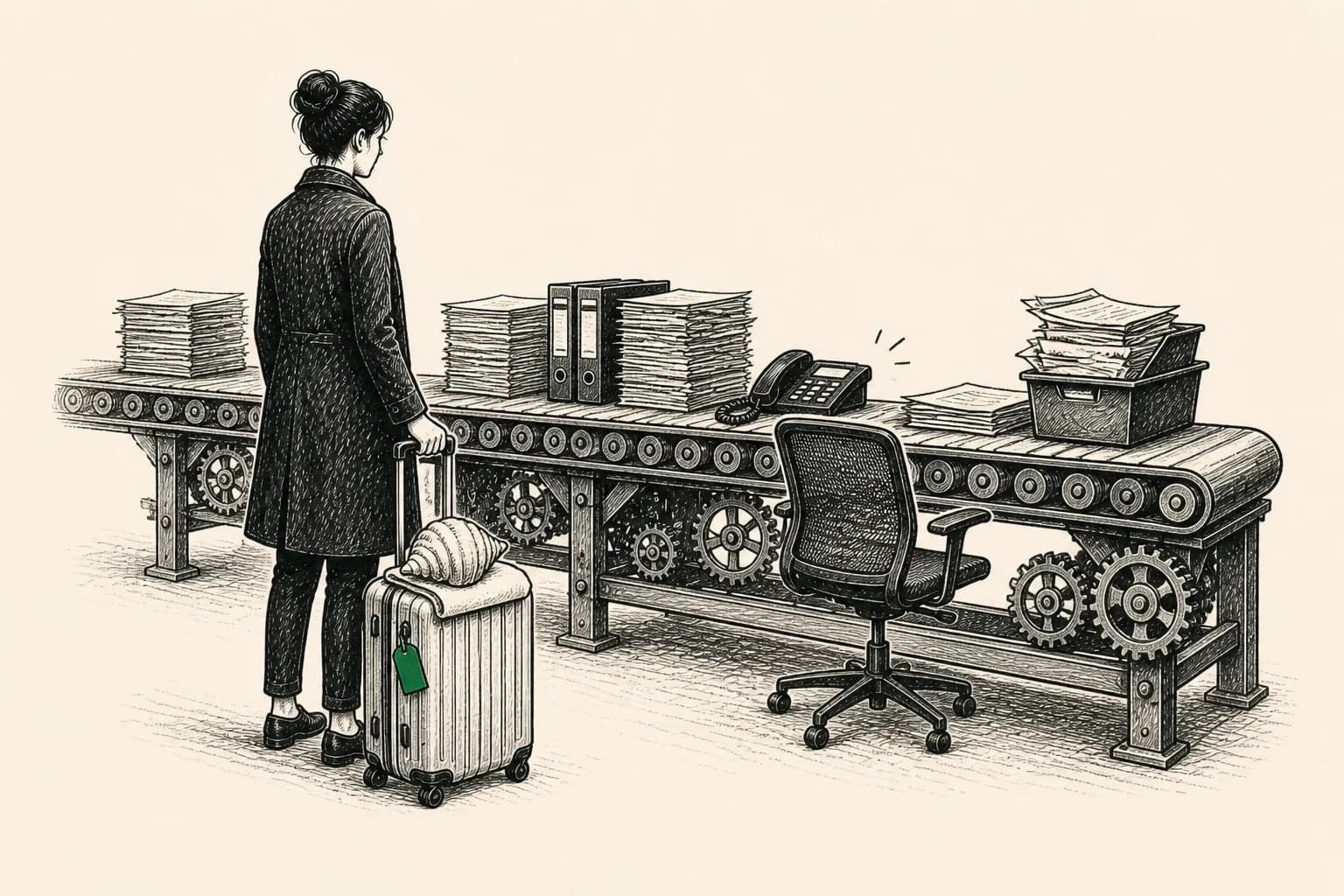
Burnout is not one thing in my model. At least four layers can sit underneath the same feeling of exhaustion.
First: accumulated emotional weight—conflict, failure, criticism, hurt, fear and difficult events at work or home.
Second: an automatic way of working—be good, never make mistakes, finish everything, never disappoint, control it yourself.
Third: skills and organization—prioritising, delegating, protecting time, planning, negotiating resources.
Fourth: external reality—too much work, too few people, no budget, a destructive manager, or work that has lost meaning.
The same complaint—no energy, irritation, reluctance to open the computer—does not guarantee the same solution.
A person can return to the old way of working
One work conflict may take forty minutes in the room and three weeks in the person's mind. The manager has forgotten it; the internal meeting continues with improved arguments and no scheduled end.
Then another situation arrives, plus pressure at home, money anxiety and older material.
A holiday prevents new meetings for ten days. It does not necessarily neutralise what already accumulated.
Ten days in warm water do not remove ten years of charge automatically. The sea is blameless; it simply has a different job description.
Fear of stopping can look like dedication
Someone answers at night, takes another person's task, rechecks everything and never rests because responsible people finish the work first.
In a large organization, *everything* never finishes.
I tell leaders they have two tasks:
A. Be a good employee.
B. Do not die.
These need to be solved in parallel.
The person may understand this and still continue because stopping feels dangerous. A holiday gives relief but does not cancel that command.
A technique cannot hire the fourth employee
It would be equally foolish to turn every burnout story into parents, the past and an internal response.
Sometimes the person is genuinely doing four jobs.
An emotional technique is not a human-resources department. It cannot create budget, staff or a competent manager. It cannot manufacture meaning in work that no longer has it.
This external layer needs change—but first it should be separated from the old response and missing skill.
I separate response, skill and the structure of work
Suppose fear of the manager makes someone accept everything. That old response needs attention.
After it changes, the person may discover they do not know how to discuss workload. That is a skill.
They may then have a calm, competent conversation and hear, “No staff. No delegation. Do all of it.” That is information about the job.
The three situations begin alike and require different moves:
- change the response;
- build skill and structure;
- change external reality if it remains unacceptable.
New energy can rebuild the same system
After emotional relief, energy returns. The person sleeps and thinks more clearly.
Then they use the new energy to reconstruct the same pattern—only more efficiently.
That is not recovery. It is repairing the engine so the car can reach the same wall faster.
New working rules need to exist in the calendar, task list and things no longer done—not only in the person's intentions.
Red flags need to appear before burnout does
“I have noticed I burned out again” is accurate but slightly late.
Earlier signs might include urgent work replacing important work, doing other people's tasks, or sleep beginning to deteriorate.
A red flag is not another reason for self-criticism. It is a prior decision to review the load before the whole system collapses.
First I separate what the Method is meant to change
I separate three layers: the automatic response that keeps the person working, the practical skill needed to set a limit, and the actual structure of the job. Treating all three as ‘burnout’ makes the diagnosis wonderfully compact and the solution almost useless.
We first work with the fear, guilt or threat attached to stopping. Then the person needs a concrete boundary: a priority decision, changed deadline, request for resources or refusal of work that cannot be done responsibly.
New energy must not become fresh fuel for the same machine.
The next demanding period is the test. If the response no longer commands more work and a real boundary exists, but the workload is still impossible, the Method has completed its part. The system—not the person’s nervous system—now needs changing.
Recovery is not tolerating the impossible again
Energy returning matters. Better sleep matters. Reduced emotional weight matters.
Sustainable recovery begins when the person also lives and works differently, and the new system does not lead immediately to the same point.
A holiday can be a valuable part of recovery. It should not be solely responsible for emotional work, boundaries, management, meaning, budgets and hiring three people.
That would be an unreasonable role even for a very good holiday.